

Dual Head Stethoscopes
Combination scopes (those equipped with both a diaphragm and bell) are designed to provide a broader frequency response. In a typical combination scope, only one side of the chestpiece is "active" at a time. Rotating the chestpiece around its valve stem selects one side and "deactivates" the other. Hold the tubing with one hand and rotate the stethoscope chest piece until it is clicked into place.
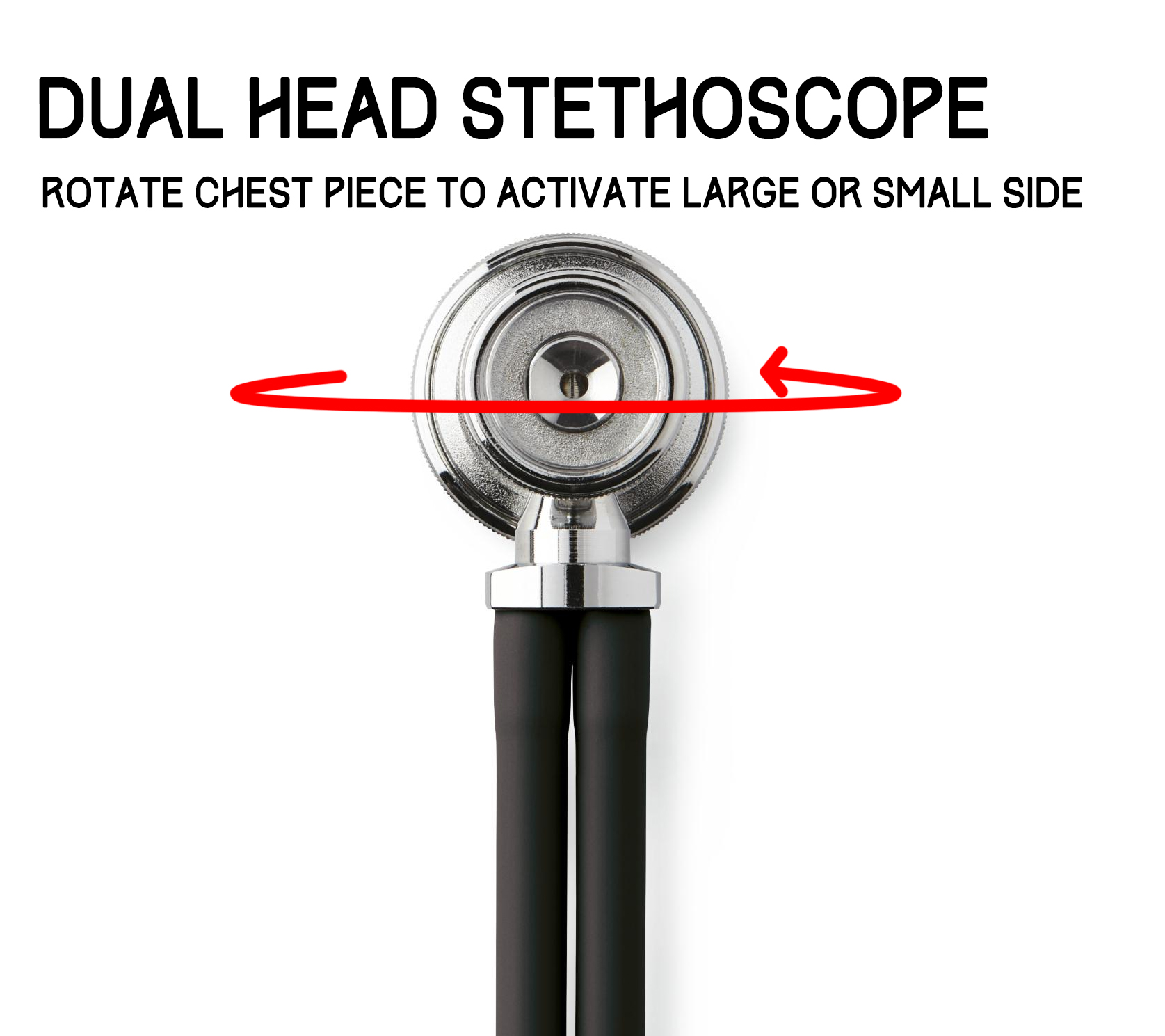
Use the smaller bell for a more focused exploration of sound in a smaller area. The smaller bell also gives more detail by reducing the area covered and shutting out nearby sounds that a larger bell would pick up. Use the smaller bell to distinguish between subtle sounds in specific locations like a cardiologist or other medical staff.
Use the other side of the bell (with the diaphragm) to listen to a less focused area inside of the chest cavity.
Recent Posts
-

Goniometers: What Are They? Why Are They Useful?
SHOP ALL GONIOMETER SIZES: VISIT OUR GONIOMETER SECTION Goniometer in Physical Therapy: Why It’s Ess …19th Jan 2026 -
Best Holiday Gift Ideas for Nurses in 2025 from ScrubSmart.com!
The holiday season is a meaningful time to recognize and thank the nurses who work tirelessly throug …24th Nov 2025 -
2024 Nurse Student Essentials for Back to School!
As the school year approaches, nursing students need to gear up with the right supplies to succeed. …8th Aug 2024